Welcome to Applied Systems Thinking. Crisis is upon us globally. I’ll be integrating geopolitics, finance, energy, health, psychology, resource availability (especially food), and the plans of the elites to corner the market on everything that matters. If you’d like to support my work, you can buy me a coffee at the link below:
Nicole Foss
I’m a systems analyst, always looking to expand my big picture. I’ve been doing this for forty years, integrating as many subsystems of reality as possible.
Maximal independence from centralised systems will be incredibly important. Of course the ability to do this varies greatly between people, but if everyone does what they can they will be protecting themselves as much as possible. Hopefully people will also protect each other. It’s essential to stop believing all politicians and all legacy media for a start. They’ve all been comprehensively lying to you about everything important. All political tribes have been co-opted, so voting in a different group will not help. We need to address our predicament ourselves, from the bottom up. Keeping an open mind will be essential. Some of what you see here may challenge deeply held beliefs, but please allow those beliefs to be challenged. Tribalism is toxic. They want us driven into our respective corners, with no overlap of worldview, so as to divide us as much as possible. A house divided cannot stand. Much of what’s happening is very confronting, but not dealing with it is not an option, because the changes will happen anyway. The choice is between being as informed as possible, trying to find a way forward that works for you, your family, and your community, or to submit to the malign authority that’s rapidly developing. This is no time to be passive. We are the ones we’ve been waiting for.
It was obvious from the start of the war in the Gulf that it was unwinnable, and would have catastrophic consequences globally. Some suggest that the ease of the illegal Venezuelan operation went to Trump’s head, so it was easier than it should have been for Israel to convince him that Iran would go the same way. Israel almost certainly has kompromat on Trump, who is the most blackmailable person on the face of the earth, which could have added additional pressure. It seems more plausible, however, to say that because the consequences were so obvious, and the course of action was chosen anyway, that those consequences were a feature, not a bug, of an underlying plan, albeit not one Trump would have been aware of. Analyst Brian Berletic has frequently citied a 2009 report, which outlines such a plan in detail, pointing out continuity of agenda since then. The primary stated goal was to halt the rise of China and reclaim global hegemony. Collateral damage to the rest of the world was not considered to be an obstacle.
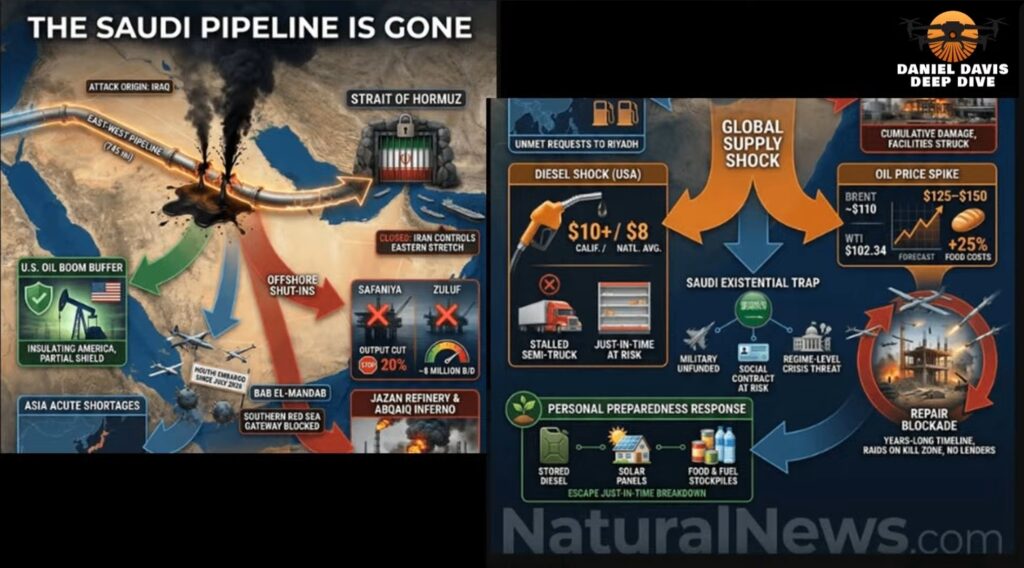
No doubt Trump himself would not have realised that politically toxic consequences, for which he will be personally blamed, would hit the US as well as most, if not all, of the rest of the world. Having taken personal credit for each disastrous decision, he will now be the fallguy for long-standing plans of the US deep state. The price of oil didn’t immediately skyrocket due to reliance on inventories, reduced Chinese demand, exports from the US strategic petroleum reserve, alternative routes for oil transit that blunted the impact, and market manipulation. That metastable situation is now coming to an end. Inventories are mostly depleted, including the US strategic reserve, Chinese demand is picking up again, other countries will be increasing overall demand by trying to rebuild reserves, alternative routes such as the Saudi pipeline to the Red Sea have been taken out, and market manipulation appears to be losing its effectiveness. Oil prices are stil below where one would expect, but the the consequences are manifesting instead in the market for refined products. The crack spread (ie the difference between the price of crude and the price of refined products such as diesel) is now over $100/barrel.
Diesel is the lifeblood of a modern economy, and producing it requires sufficient long-chain hydrocarbons. The wars in in the Gulf and in Ukraine have severely compromised exports of exactly this kind of crude, as well as deliberately damaging refineries, and a series of refinery ‘accidents’ around the world has also reduced the capacity for diesel production. These could have been the result of refineries being run flat out without maintenance or could have been the acts of sabotage. Diesel production competes with production of aviation fuel, which is demand due to military adventures, and also bunker fuel for transport by sea. Commercial airlines are cancelling flights and ticket prices are skyrocketing as a result. Shipping costs are rising sharply due to fuel prices and the rapidly increasing price of insurance. Diesel prices in the US have recectly hit record levels, and this is hitting the US economy right before midterm elections, when Trump and his party are historically unpopular. Many farmers are unable to harvest crops, because the cost of the necessary fuel exceeds the value of the crop. Truckers are planning to strike over fuel prices, which will heavily impact supply chains.
This is only the beginning of a dieselpocalypse that will be affecting the whole world. Russia banned diesel exports after its refineries were attacked, even though damage was not particularly severe due to the nature of the attacks. Ukraine uses relatively small drones that don’t pack much of a punch, although loading them with kerosene makes for a lot of smoke. Russia will be able to repair these installations, but still may choose not to export diesel. Refineries in the Gulf are a different story, as they were hit with ballistic missiles, and may have been completely destroyed. The US is imposing secondary sanctions on countries importing crude from those it’s at war with, so countries like India may stop importing and refining, further reducing diesel supply.
The US is also contemplating a diesel export ban, although this would be difficult. If the ban were global, it would include Canada, but Canada is where much of the raw material for producing diesel is sourced, and the US is currently engaged in a trade war with Canada anyway. A US diesel export ban might lower prices domestically, although supply chains could be disrupted, but it would send diesel prices around the world through the roof, which could lead to unrest, civil wars, or revolutions. Combined with the shortage and high price of fertiliser as a result of the war with Iran, skyhigh diesel prices could well mean planting seasons missed in many countries. This would lead to famine, and this would obviously amplify the potential for conflict within or between countries.
The Gulf monarchies are all at risk. They owe their existence to the British drawing arbitrary lines on a map under the Sykes-Picot arrangement a century ago, which has led to permanent destabilisation of the region. All are led by corrupt dynasties that are unpopular with their people. All are American vassal states that have been paying protection money through the petrodollar system, but that system is essentially over, and the promised protection never materialised when it mattered. None of them can defend themselves, especially against civilisational states like Iran and Yemen that have existed for thousands of years in their territorial fortresses.
Europe is also uniquely vulnerable. The US blew up the Nordstream pipeline in order to force Europe to buy much more expensive American LNG. In addition, Europe has voluntarily cut itself off from other sources of Russian gas, and its gas storage is insufficient for winter. It’s closed nuclear plants that were not at the end of their design life. Now Saudi Arabia has declared force majeur on its oil delivery contracts to Europe for at least the next two months, and very likely longer, since Saudi Arabia is currently unable to export oil at all due to the consequences of its war with Yemen. A US diesel export ban would hit it very hard as well. Trump has no hesitation in harming supposed allies.
There are decades in which nothing happens, and then there are years where decades happen. That is our current situation. There has never been an energy crisis anything like as severe as the one beginning to unfold. The consequences have barely begun to manifest, but the slow build-up is ending and the damage will now escalate rapidly.
The world is about to experience a polycrisis – where many different factors that have been approaching limits hit those limits all at once. People will probably be noticing the diesel shortage first, as they already are in the US. Diesel makes the world go round, but it’s about to become either extremely expensive or entirely unavailable. Countries that produce it will be banning exports, as Russia has already done, and the US will likely follow suit soon. Exports of other forms of energy will also be curtailed, meaning that fungibility will be a thing of the past. Those that have resources but cannot defend them will be looted by the powerful. The world is taking a giant step back, abandoning the rule of law in favour of the rule of raw power, where might makes right, but the mere illusion of might will rapidly be shattered.
Energy is the master resource, but the infrastructure for extracting, delivering, and refining it into useful products is being deliberately destroyed worldwide. Of the top 20 exporters, 9 are either offline or heavily constrained. Hormuz is almost entirely closed. The Gulf of Oman is blockaded. The entrance to the Red Sea is closed to Saudi exports. Insurance rates have skyrocketed due to the increased risk to shipping. The Saudi export pipeline has been destroyed. The war between Russia and Ukraine has become a race to destroy each others’ energy infrastructure. Refineries all over the world are experiencing strange ‘accidents’ that take them offline for months to years, or maybe permanently. Demand for diesel is causing a shortage of aviation fuel and bunker fuel for shipping, since the remaining refineries have to choose between these. All forms of goods transport are going to be badly affected.
The consequences of this have not yet been widely felt, but that era of more or less comfortable ignorance is about to come to an end. Energy essentially equals GDP, and the global energy supply has taken a giant step backwards, guaranteeing a global economic depression and shortly a global famine as well due to dual crises in diesel and fertiliser as a result of the war in the Gulf. Farmers who managed to plant this year may not be able to afford to harvest. Next year they may not be able to afford to plant at all. This will cost the lives of hundreds of millions of people at a minimum, and likely more.
As perceived risk rises, financial behaviour changes. The bond bond vigilanties are back with a vengeance. Far greater risk premiums are demanded in the global bond market, but this comes at a time when indebtedness is so extreme, due the end of a debt cycle, that higher interest rates are fatal. This is becoming increasingly evident in the US, as it desperately tries to hang on to hegemonic power, while control slips away. Despite the efforts of Treasury Secretary Bessent to manipulate rates downward by shifting to the short end of the curve, rates on the longer bonds continue to rise and are now firmly in the danger zone. The next step is an exploding debt scenario, especially given that the diesel crisis will crush economic growth. When the interest rate on debt exceeds the rate of growth, debt grows exponentially.
Europe is very highly exposed, due to its loss of both Russian gas and Gulf oil. It’s rapidly deindustrialising as a result, although it remains determined to make a bad situation worse as expensively as possible by contemplating a futile war with Russia. Much of Asia is exposed due to its hyper-dependence on Gulf energy and general lack of reserves. Australia and New Zealand are downstream of these economies, and so will be similarly affectec. China has reserves, but is already in the grip of depression led by its collapsed real estate market. Most of Asia (notably Japan, South Korea, and China) is dealing with demographic collapse. Much of the global south is dependent on imports of food and fertiliser, both of which will be sharply curtailed. The US is descending rapidly into incoherent fascism, and with an apparent desire to burn everything down if it can’t remain as the sole super-power.
The hyper-wealthy of the world are busy using the situation to maximise their own riches, while ignoring the consequences to their fellow human beings, even though those consequences will ultimately land at their own doors as well. It’s ironic that their guiding philosophies of ‘effective altruism’ and ‘extreme long termism’ depend on them having a long term, while their own actions are helping to foreclose on that possibility. Their philosophies involve balancing the projected needs of trillions of their own hypothetical, supposedly immortal, supposedly galaxy-hopping descendents against the needs of actual human beings in existence today. Actual humans lose under this worldview, and must be culled in order to preserve sufficient resources for the Star Trek future our delusional oligarchs assume is an option.
Longtermism – Wikipedia
Deprioritization of immediate issues
Another concern is that longtermism may lead to deprioritizing more immediate issues, what Elizabeth C. Hupfer calls the Far-Future Priority Objection to longtermism. For example, some critics have argued that considering humanity’s future in terms of the next 10,000 or 10 million years might lead to downplaying [currently critical issues of survival]. Critics also worry that the most radical forms of strong longtermism could in theory justify atrocities in the name of attaining “astronomical” amounts of future value.
In the face of all of this, the best strategy people can pursue is to get out of debt where possible, upskill as much as possible, learn to live simply, scale down material expectations, get out from under as many dependencies as achievable, and above all build relationships of trust with neighbours. Community will matter enormously, as skills and resources can be shared, reducing the need for so many external inputs. Learning the extent of one’s local reality, in the absence of impirts, would be highly advisable, as would community asset mapping. Crunch times have happened before, since many aspects of human history are cyclical. This will be a bad one, given have far we have to fall from the peak abundant energy has allowed us to achieve, but it will not be the end of the world.
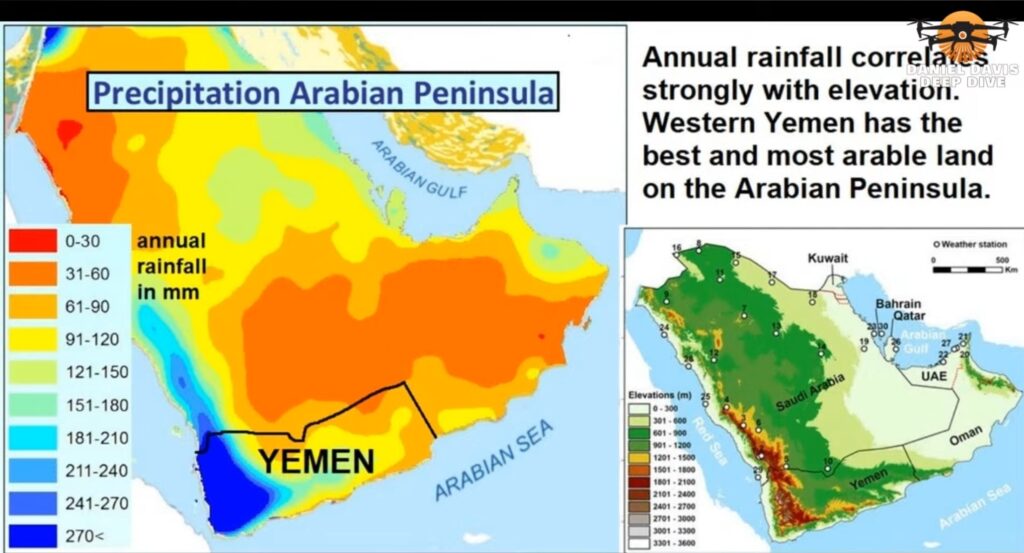
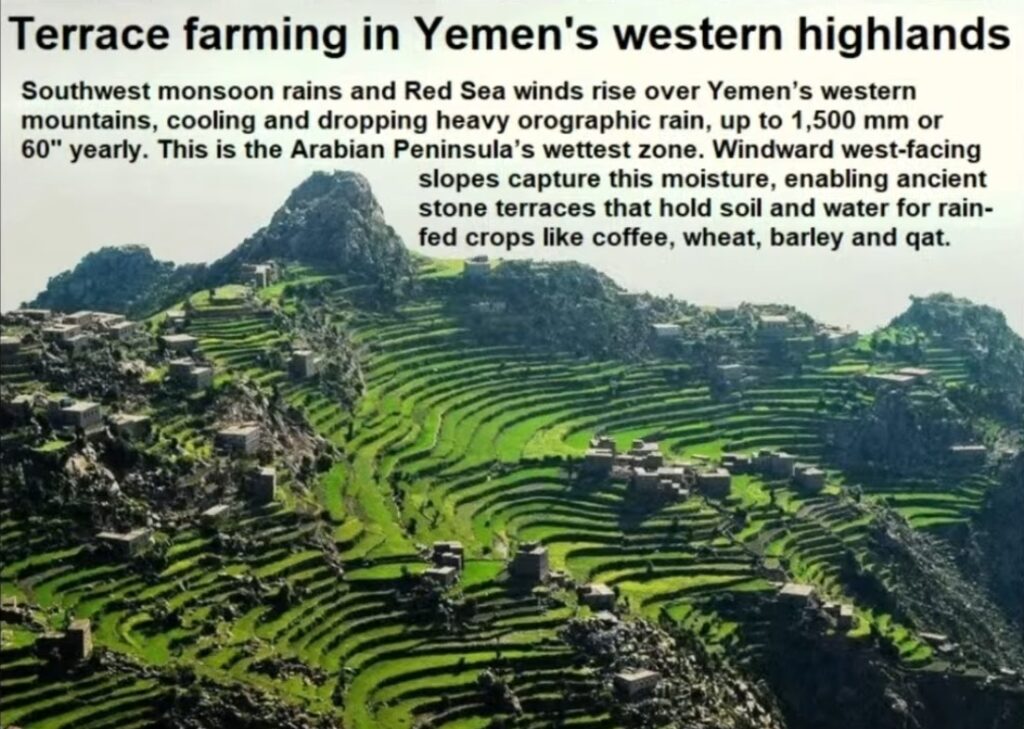
The conflict between Saudi Arabia and Ansarallah (ie the Houthis) has accelerated substantially. It began after the Saudis, at the prompting of the US, bombed Sanaa airport as a Yemeni delegation was returning from the funeral of Ayatollah Khamenei, and that one strike has ignited a firestorm that Saudi Arabia is ill-equipped to handle. Yemen is not simply a backward desert country, despite being commonly perceived that way. It’s mountainous, like Iran, with rivers and fertile soil in the west of the country, like Iran, and inhabited by tough mountain people who will never surrender. Its population exceeds that of Saudi Arabia, and is able to provide for itself. Yemenis are capable engineers, and have developed their own missile programme, like Iran. The Saudi and US backed ‘government’ in the east of the country is largely powerless, while the part of the country controlled by Ansarallah contains the capital and the majority of the population. They are the real government of Yemen.
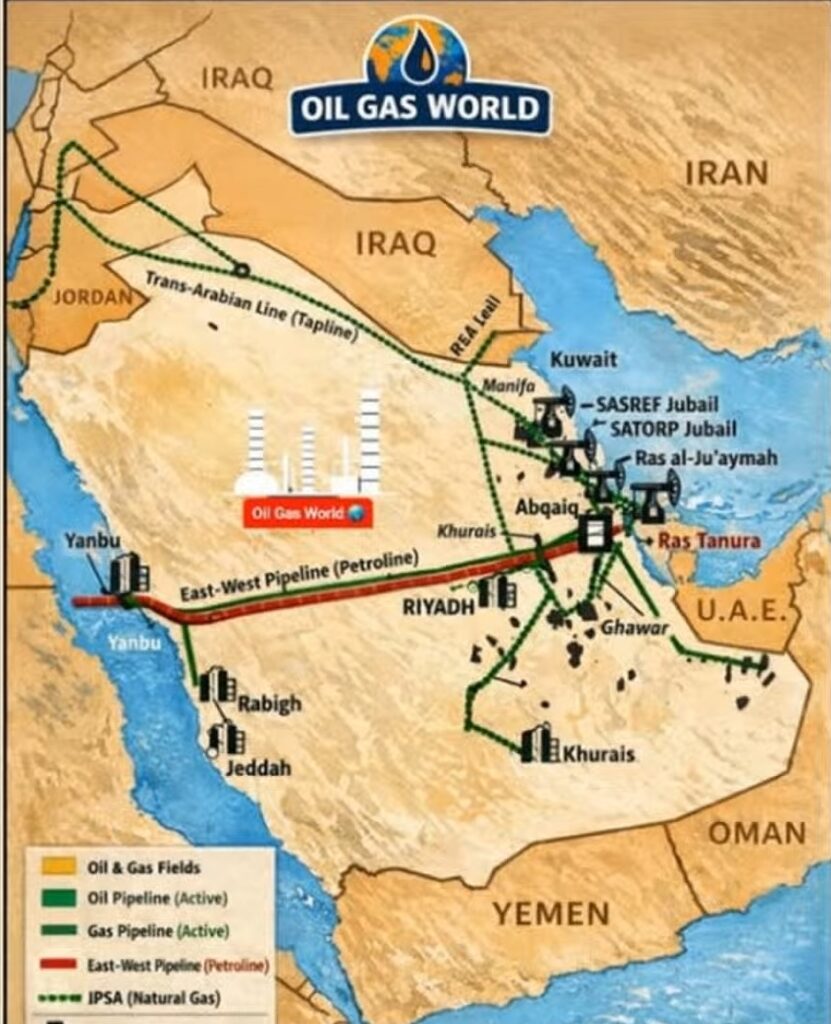
In the last week, Ansarallah has conducted a lightning campaign, managing to capture a large amount of US military equipment in the process. They now control the Red Sea coast, the strategic Islands at its mouth, and the Bab-al-Mandab strait at the southern entrance to the Red Sea. They have now closed this choke point to Saudi shipping. In addition, they’ve substantially damaged a great deal of Saudi oil infrastructure. They began by bombing the Red Sea port of Yanbu and the state of the art refinery at Jazan. Most recently, the Saudi oil pipeline from Abqaiq to Yanbu has been destroyed, although no one has claimed credit for this attack so far. The Iraqi resistance may have been involved, along with Ansarallah. It’s also possible that it may have been a false flag attack by the Israelis, given that they have a vested interest in seeing Islamic countries engagaed in mutual destruction. Whomever caused the damage, it is catastrophic, with pumping stations obliterated. Saudi Arabia has now lost the ability to export oil at all, and is now looking for financial lifelines of at least $8billion. It’s very existence in its current form may be under threat as it faces strategic defeat. Deliveries to Europe have been cancelled for both September and October, leaving Europe in a dire position. Saudi Arabia has also asked the US for military assistance, but Trump refused, as have the other signatories to the recent Mecca defence pact.
Trump has instead sent 40,000 MK34 2000-pound bombs to Israel. On detonation these will send metal fragments over thousands of feet, and can cut through thick metal and concrete. These are obviously meant to facilitate Israeli genocide of civilians in Gaza and southern Lebanon. Interestingly, Israel lacks planes capable of carrying these, suggesting that American planes would do the job. The only priority for the US in the Gulf is the safety of Israel, although it’s becoming clearer that it cannot perform this task. It’s already demonstrated its lack of capacity to protect its erstwhile allies among the Gulf states, and its bases in these countries have merely acted as convenient targets for the Iranians. Virtually all US bases in these countries have been destroyed, and US equipment and personnel are now being herded into Israel, where they’ll make for a concentrated and target-rich environment. The most significant concern now is that, lacking a means for comventional victory, either Israel or the US may well resort to using nuclear weapons.
In the meantime back in Washington DC, self-styled Secretary of War, Pete Hegseth, is the subject of articles of impeachment filed by Republican Congressman Thomas Massie. Hegseth is obviously incompetent and deserves to be removed, although the entire department is unfit for purpose at every level, according to retired military professionals, and therefore removing Hegseth may make little difference. The department prioritises style over substance and compliance over planning or critical thought. Stephen Miller and Russell Vought appear to be running the show in the administration, and both are ghastly, with horrible agendas to foist on the American people. Neither are shy about their priorities, which are grounded in racism, misogyny, fascism, and extremist Christian supremacy. Trump is not the foreign-policy decision-maker, being preoccupied instead with redecorating, putting his name on everything, dispoiling DC landmarks, creating monuments to himself, and posting large quantities of grandiose AI slop of himself in heroic poses. His poor physical and mental health are becoming more obvious by the day.
The US though a war with Iran would be quick, like their coup in Venezuela (facilitated by bribed insiders). The Israelis who talked them into it assured them that the Iranian regime would fall after a decapitation strike, but this was a lie to get the US to engage with a long-held Israeli priority. No previous president had been foolish enough to go along with this, but Trump has an ego the size of a planet combined with no understanding of the politics of the region, the history, the culture, the religion, the people, the geography, Iran’s preparedness, necessary logistics, or any other relevant factor. Flatter him and he can be talked into anything, especially if flattery can be backed up with the blackmail material from the Epstein files that Israel no doubt possesses.
Trump has never been a strategic thinker, to put it mildly, and the US entered this conflict with nothing at all resembling a plan, or even an idea of what a hypothetical victory might realistically look like. When the initial decapitation strike not only failed, but unified and galvanised Iran like never before, the US simply resorted to a bombing campaign, much of which was against civilian infrastructure – a war crime – because anything of military value was underground and inaccessible. The same cannot be said for the US bases in the region, which were above ground and exposed, and have now been destroyed, with far more casualties than the US is prepared to admit. The physical damage is at least in the hundreds of billions, and possibly more, and the damage to the reputation of the US military is incalculable.
US logistics in the region have been destroyed with these bases, meaning that their largely ineffective blockade of Hormuz cannot be adequately supplied. Provisions, fuel, additional weaponry, and other necessities must come from Diego Garcia in the Indian Ocean or from Singapore, and maintenance must be deferred. Deployments have been extended under very difficult circumstances, and military personnel know they’re not there to defend any genuine US interest. The rationale for the war keeps changing, but they know they’re really there to defend Israel, while it attacks all its neighbours and conducts genocide in Gaza, the West Bank, and southern Lebanon. Morale is therefore very low.
The US is now in an escalation trap, with Iran firmly in control of the conflict. Trump is now desperate to walk away and claim victory, but he won’t be allowed to. Iran is baiting the US into expending its remaining precision strike munitions and interceptors, knowing that these are in short supply with no surge capacity to produce more quickly, and that production in any case depends on rare earth elements controlled by China that China is refusing to provide. Almost out of conventional options, the US is now considering the use of tactical nuclear weapons against Pickaxe Mountain, where they think Iran’s enriched uranium might be concealed. Whether or not the material is actually there, this would achieve nothing, since even a nuclear weapon would not penetrate hundreds of metres of granite mountain.
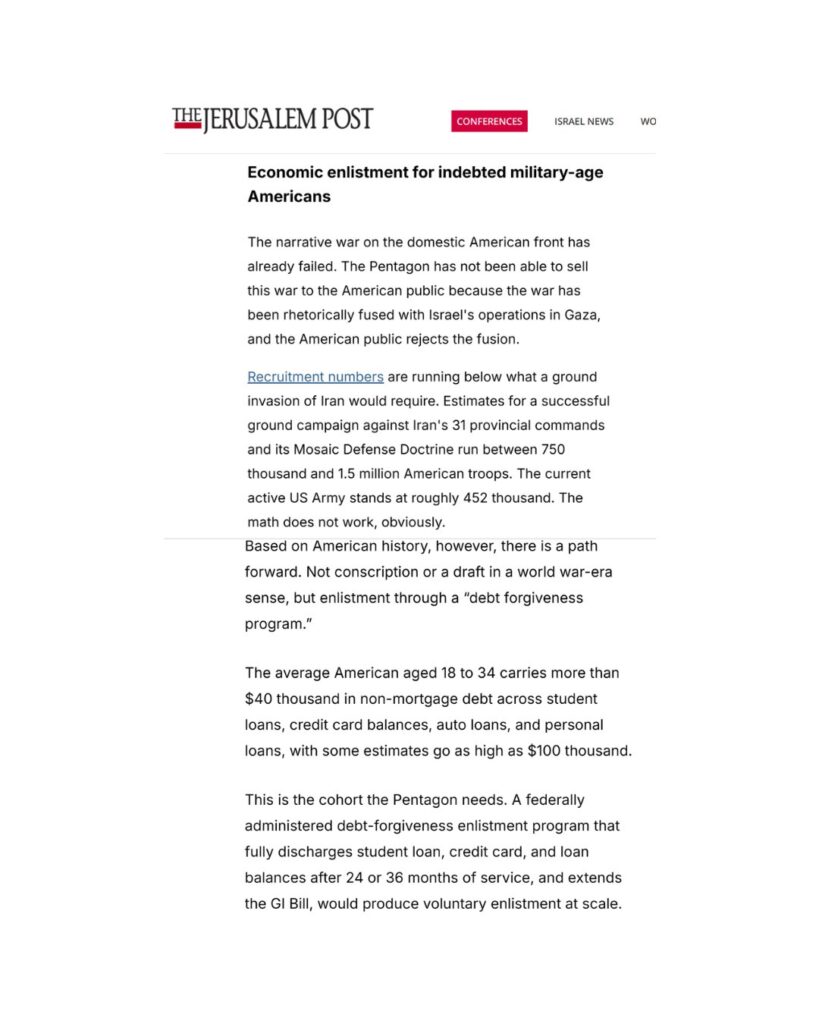
The US may also be contemplating some form of ground incursion, although this would be doomed to fail. The US armed forces are drastically under-manned for such an operation, and have failed to recruit adequately for many years. Interestingly, the Jerusalem Post suggests a mechanism by which recruitment could be greatly enhanced – by offering debt forgiveness in exchange for military service to young Americans drowning in debt, especially those with student loans that cannot be discharged in bankruptcy. This tactic is something I wrote about many years ago as one of the many potential escalating consequences of a debt trap – debtors’ prison, indentured servitude, or being strong-armed into the military.
Iran has decided not to waste further time negotiating with the Trrump regime, as it cannot be trusted to uphold any committments it makes, and has often used negotiations as a front for a surprise attack. It will wait out Trump’s term, knowing that this means the conflict will continue sporadically for a long time, at enormous cost to the global economy and consequently to the global population. The next president will inherit this mess. In the meantime, Iran will be quietly reshaping the balance of power in the region, as it is now a dominant force to be reckoned with. The Gulf states are likely rethinking their allegiances, now that’s it’s obvious the US has neither the desire nor the capacity to protect them. Israel was always the only real entity the US wanted to defend, and they couldn’t even manage that. US bases and arms sales in the region were merely a protection racket to guarantee profits for the US military industrial complex.
In the absence of achievable military options, operation Economic Outcast is treasury secretary Bessent’s plan to isolate Iran economically by imposing secondary sanctions on countries trading with Iran. He’s threatened to cut them off from the dollar system. He doesn’t seem to realise that this would hasten dedollarisation of the global economy in favour of alternstive payment systems, and end up isolating the US instead of Iran. Russia, China, and India will not be respecting these sanctions and cannot be forced to do so. In fact China has made it illegal under Chinese law to comply with American demands. The US has no leverage against Russia, and India will find work arounds to access what it needs. Without compliance by the major players, the plan cannot succeed.
The US has comprehensively failed in Iran, and has been strategically defeated. The consequences of this misadventure will be disastrous for a world deprived of sufficient fuel, fertiliser, and other essential commodities, likely permanently. The Anglo-American empire is ending, and the result will likely be decades of instability as the world reorganises itself.
As covered in the previous post below, the US treasury secretary, Scott Bessent, is currently buying back long term treasuries with money raised by selling short term T-bills. This is shifting the US debt burden from longer term debt instruments at an interest rate in the danger zone for an exploding debt scenario towards short term debt at lower rates. The market sets the rate for longer term debt, while the interest rate on T-bills is under the control of the Fed, so Bessent is seeking both a lower interest rate and greater control. As discussed in the post below, this shift is in preparation for a transition to digital finance through stablecoins, which are to be pitched globally at the retail level.
Stablecoins are backed by US T-bills one to one, and global retail adoption is intended to provide captive demand in perpetuity. A stablecoin system would be very profitable for the issuer, as T-bills pay interest that would go to the issuer, not to the holder of the coins. This is, of course, why the Trump family has set up World Liberty Financial, and corruptly gained a banking licence. Their USD1 coin appears to be intended to replace the existing USD system, although this goal could be described as optimistically ambitious. The question becomes how would they engineer the transition from the existing system to all-digital finance when so many people are already skeptical about digital ID and programmable central bank digital currencies (CBDCs).
Stablecoins would be just as programmable, and as effective a tool of central control as CBDCs, but even less transparent and with even less accountability. Fewer people understand this than understand the risks of CBDCs though. Stablecoins would be marketed for convenience, and they genuinely would be convenient, but they would also be a trap. Digital finance is intended as a pathway to a new form of feudalism, with unaccountable oligarchs ruling over an underclass of surveilled and controlled powerless serfs in their respective fiefdoms. The risks associated with a large underclass would be mitigated through the degree of surveillance and control, which, if the system works as planned, would be greater than any previous authoritarians would have dreamed of. Gaza prior to the events of October 7th was the pilot project for the surveillance aspects of this.
Recently the media has covered scare stories about AI escaping confinement, tricking operators, and conspiring to achieve its own unpredictable goals. This could be laying the psychological groundwork for exactly the kind of event needed to force the transition to digital finance. In fact such a scenario has already been wargamed, and this is usually done for a reason. For instance, Event 201, which wargamed a coronavirus pandemic, occurred shortly before covid emerged. The AI wargame – Operation Blackout – was set on a hypothetical election day, simulating a coordinated attack on critical infrastructure with a view to having the election cancelled, and this succeeded. Considering that Trump has already tried to cling to power after an election loss, and is currently trying to pass voter suppression legislation prior to the midterms he’s on track to lose, it’s not much of a stretch to imagine such a scenario playing out in the not too distant future.
Klaus Schwab of the WEF has been promising a massive cyberattack for some time, and has mentioned it potentially affecting the financial system. It would be possible to wipe out bank balances and blame it on AI, giving plausible deniability to the actual actors behind it. People could then be promised the return of their money, but only in digital form. Most people would have little choice but to accept, as the alternative would be destitution. If this occurred around an election, as wargamed, it would keep the incumbent in power while allowing for a period of major financial consolidation and centralisation of power. This happened during covid, when big businesses were able to steal market share from smaller players because the smaller ones were subjected to much stricter rules around operation, and many went under. This time the centralising impetus would be much greater, and the ability to resist would be greatly reduced.
This would amount to severe financial repression, with people’s private wealth confiscated to prop up the credit ponzi and extended the debt cycle a little further. The head of the European Commission has recently been talking about the need to mobilise people’s savings and make them available to businesses, suggesting that multiple players are party to attempting to engineer the transition. In the American context, success may hinge on keeping the Trump regime in power, but this may be challenging given his failing mental and physical health. It’s unclear whether JD Vance would be able to consolidate power if Trump were to die in office, as he doesn’t appear to have Trump’s grasp of the mafia tactics he uses to control people. There may not be much time to implement the digital plan, given that the financial system is already fragile due to massive over-leverage and a shortage of collateral. If the powers that be are to deliver the transition, which is existential for them, they need to act quickly, meaning that the rest of us need to brace for impact.
The US bond market is in risky territory, with interest rates on the thirty year now over 5% and the ten year heading in that direction. Buyers are not showing up, and several countries may be on the verge of selling existing holdings as their own economies deteriorate. With $40trillion in debt (and vastly more in unfunded liabilities) combined with sluggish economic growth, the higher interest rates needed to attract buyers would create an exploding debt scenario. The higher rates reflect a loss of confidence in the dollar, due to a loss of confidence in an obviously corrupt government implementing policies that are either nonsensical, counterproductive, or outright criminal, and then changing those policies in according with the whims of the Mad King. When confidence is failing, the risk premium associated with holding their sovereign debt rises.
Treasury Secretary Bessent is currently engaged in large scale buy-backs of longer term treasuries, paid for by issuing a flood of short term T-bills, for which there’s still plenty of demand, meaning the interest rate is significantly lower. Over time this could lead to a scenario where government debt was constantly rolling over, and even shorter term rates could well be rising. Bessent’s reputation is for profiting from chaos, as he did when he worked for Soros and afterwards, and that pattern appears to be about to repeat itself. The plan appears to be to destroy the dollar by deliberately undermining confidence, and also shorting it to profit off its potential demise. The plan could, however, be derailed by a knee-jerk flight to ‘safety’ into the reserve currency, and by market participants demanding dollars to pay down dollar-denominated debt.
The most ambitious and audacious aspect of what the regime has in mind is far more nefarious than merely extracting profit from a collapsing system. Converting the debt to primarily T-bills lays the groundwork for the promised digital financial reset. Stablecoins are backed one to one by T-bills, and the intention is to market stablecoins at the retail level worldwide. If successful, this would have the effect of creating permanent captive demand for US debt, while collapsing other fiat currencies along with the commercial banking system. The Trump sons, and Steve Witkoff’s son, are positioning themselves for this eventuality with a company called World Liberty Financial, which issues the stablecoin USD1. The regime has just corruptly granted this endeavour a banking licence. No doubt the intention is eventually to dominate what would amount to a privatised global financial system in their hands, where the founders would profit from every transaction worldwide.
The question becomes what are the prospects for this to succeed. There would be powerful opposition from the current central banking system under the Bank for International Settlement. There would also be opposition from powerful sovereign countries such as Russia, China and Iran, which are looking to build a multipolar world to replace American hegemony. The parties in opposition still want a fully digital financial reset, but they will refuse to be subjugated under a US version and likely cannot be pressured into it as the US has no leverage over them. China is already creating an alternative digital cross border payment system and onboarding participants. In addition, the circular financing bubble around the AI build-out is going to implode, as all ponzi schemes eventually do, and when it does, the fallout is not going to be controllable. The Epstein class will try to buy up everyone else’s assets at distressed prices, but extremely centralised plutocracy will not be stable, and may well end in revolution.
Apart from financial competition and imploding ponzi finance, the energy crisis due to the wars is likely to derail many plans. The ability to maintain, let alone increase, complexity rests on the availaiblity to society of surplus energy. Even before the widespread destruction of energy infrastructure, the energy profit ratio (the comparison between the energy input and output for an energy project) for energy production globally had been falling rapidly. The wars have accelerated this process considerably, and the destruction is unlikely ever to be reversed. A programmable digital financial system would be a substantial jump in system complexity at a time when even maintaining the existing level of complexity is not going to be possible.
Ultimately, failure is inevitable. Instead of the planned totalitarianism, the world is more likely to see a period of anarchy, with considerable variation in fortunes depending on local circumstances. Most people are unaware of what their local circumstances would be in the absence of the globalisation that most are accustomed to, and it would be a good idea to learn and prepare in advance. There may not be much time left to do so.
Andrew and Tristan Tate are international criminals facing serious charges in both the UK and Romania. The brothers have long been involved entrapping young women into porn and sex work, trafficking them internationally. Their trademark is the humiliation and subjugation of women, whom they consider inferior beings lacking in intelligence. They brag about their activities online, so it isn’t a secret. They’ve also been at the heart of the Trump regime, connected into it originally by Trump’s youngest son, Barron, who’s been deeply involved in the so-called ‘manosphere’. Barron was the one who connected the podcast bros of the manosphere to Trump’s last election campaign, where they played a significant role in his re-election.
The Tate brothers were originally in trouble in the UK, but charges were dropped and they were allowed to leave the country for Romania, where they were involved in the same activities and were arrested there. Trump sent his envoy, Rick Grenell to get them released by threatening the Romanian authorities, and the Tates were transported to Florida where they were treated as manosphere heros, invited to the White House, and allowed to travel the world under US government protection. Now, however, the case against them in the UK has been reopened, and they’re in custody facing extradition to the UK on 42 charges of sexual assault, rape, child pornography and human trafficking. So far the Trump regime has no interfered to prevent their extradition, likely because they can’t afford to be too publicly associated with activities that are too obvious.
Isolated young men are the target audience for the Tate output, and the opinions they model for boys as young as middle school are having a significant effect. Teachers are noting behavioural problems, with young men behaving abusively to their female classmates and ridiculing female teachers. They’re essentially modelling the most toxic form of masculinity, and this happens to dovetail with the regressive views of the Heritage Foundation, the goals of Project 2025, and Hegseth’s favourite pastor, Doug Wilson, who’s infamous for wanting to overturn the 19th amendement that gave women the right to vote. This is a backlash against the rights women have gained over the last fifty years, and the goal is to return women to subservient status, as property to be owned as they were previously treated under the law.
The Tates have been running clubs like ‘hustlers’ university’ for the practice of misogyny, charging $8K or more per year for instruction in the subjugation of women. They refer to obtaining a PHD, but for them it stands for pimping hoes degree. The abuse of women is the glue holding these groups together, but money laundering and political activities are also major goals. The Tates are intimately involved with World Liberty Financial, an initiative of the Trump sons and Steve Witkoff’s son Zack. This is a crypto stablecoin scam, allowing for the founders to issue money and take a cut from each transaction. It could be described as an attempt to privatise the dollar. WLF has now been granted a banking licence. This is grifting on an unprecedented level. The Trump sons have already made $1.7 billion in less than two years. The Tates have become extremely wealthy from all their criminal endeavours as well.
Trump’s Department of Justice is naturally covering all of this up, as they’ve done with the Epstein files, defying statutes and court orders in the process. There have been no investigations, despite obvious evidence of racketeering, wire fraud, sex trafficking, rape, money lsundering etc etc. Attorney General Todd Blanche was previously Trump’s own defence lawyer, and is continuing to protect the criminal network surrounding Trump and his family from accountability. It remains to be seen if the extradition of the Tates to the UK will go ahead. Their activities are on a similar level to those of Epstein, blending abuse of women, blackmail, money laundering, and political interference, as Epstein did. They have been occuring much more recently and openly, and there has been no accountability yet. The influence of organised crime on world affairs is becoming increasingly apparent, and the Trump family is at the heart of it.
Drones have been a major game-changer in modern warfare. There’s been an arms race in the Ukraine war, and drones have been at the centre of it, with electromic jamming, then fibre-optic drones, then netting over roads used for logistics, and vehicles with cages to protect them from drone attack. Tanks with no anti-drone protection, such as those used by the US, are now obsolete. Both Russia and Ukraine are now setting up separate branches of their militaries to focus on drone warfare. Russia aims to have 210,000 drone operators over 1000 units embedded with each other branch of the military in the not too distant future. Each side produces hundreds of thousands of drones per month, and may use a thousand at a time for an attack. 97% of casualties in Ukraine occur in the grayzone, between the opposing armies, as a result of drones, artillery, Russian glide bombs, and Russian TOS flamethrowers. Soldiers very rarely even see the enemy. Visibility on the battle field is almost total, as satellite images and drones with thermal imaging and night vision are everywhere, so concentration of troops is impossible. Progress is slow as only small and highly manouverable groupings are possible.
This is modern warfare, but only those with experience of it understand how different it is from older tactics and strategy. The US had set up task force to study drone warfare in Ukraine, but it was recently disbanded for petty political reasons. The new acting Chief of Staff of the army cancelled it due to personal animosity between himself and the officers who had set it up. This is extremely short-sighted, as knowledge of modern warfare is essential. The US military as currently configured would lose any conflict with Russia, or China, which has taken the lessons to heart. It has already lost to Iran for similar reasons. Iran has been using assymmetrical tactics such as drones, missiles, artillery, small armed speedboats, mines, manouverable torpedos, and small submarines. Combined with home advantage and a country set up to be an impregnable defensive fortress, the US stood little chance.
Aircraft carriers are another obsolete platform. It isn’t necessary to sink one. Merely damaging the flight deck would be sufficient to put one out of action for a prolonged period. Considering that the US is critically short of interceptors, and that interceptors are not very effective in any case, this would not be difficult if the carrier got anywhere within range of Iranian weaponry. For this reason, the carriers are so far offshore that any sorties must involve multiple refuellings. Iran has destroyed most of the US bases in the Gulf, so logistics has been heavily disrupted. Ships have to travel to the base at Diego Garcia in the Indian Ocean to resupply, hence the supply problems that are being discussed in the media. The US attempt to blockade Hormuz is ineffective due to how few naval assets are available and how far out they must stay. Morale among the naval personnel is very low, as they know they’re not defending American interests, but Israeli ones, and that’s not what they signed up for.
American military institutions are resistant to change, despite the obvious need to modernise equipment and tactics. Centcom currently has a group of a few dozen men with a few dozen drones in their multination attack drone task force. They plan to have 200,000 drones by the end of next year, produced at 10,000 per month – a tiny fraction of the monthly production of both Russia and Ukraine right now. China has produced millions of drones already. The American military was once a formiable force, but it’s fallen far behind peer competitors. The military industrial complex focuses on producing whatever will make it the most money. Actually winning a conflict is a secondary concern for them. The Trump regime is always claiming the US has the best military on the face of the earth, but in reality it simply has the most expensive. The empire is being revealed as a paper tiger. Expect many more challenges to its power now that so many other nations understand this.
The first presentation above lays out the plans behind the data centre build out. They are comprehensive and there is certainly a financial logic to them that’s obscured by distractions and AI hype. The question becomes whether or not that financial logic can be implemented in the real world, and the second presentation discusses the many reasons why this is somewhere between unlikely and impossible.
Globally the rise of debt is rapidly outpacing the ability to service it. The debt was traditionally backed by government ability to tax workers’ incomes and a share of corporate profits, but demographics and austerity have limited the tax base and incomes. Labour participation is at a record low, hence debt per employed worker is skyrocketing. Tax cuts for corporations and the wealthy have greatly limited that aspect as well. The collateral backing the debt is already inadequate, in fact far more inadequate than generally perceived. Potential buyers are already questioning the risk associated with sovereign debt, and demanding higher interest rate risk premiums as a result. This is verging on creating an exploding debt scenario.
The system is structured as a ponzi scheme, and those must continue to grow or they will implode. For financial expansion to continue, huge amounts of money must be ‘printed’ (electronically rather than physically) and for that to happen excuses must be found and available collateral expanded. When the repo crisis threatened the financial system in late 2019, covid appeared shortly after a coronavirus pandemic was wargamed in detail in Event 201. This was not a coincidence. Covid, which was manufactured through gain of function research begun in the US and outsourced to China, provided an excuse to print trillions of dollars. Increases in the money supply relative to available good and services naturally cause prices to increase as a lagging indicator, hence the substantial rise in the cost of living since then. The system is teetering on the brink again, and now war provides an excuse, but a collateral expansion is still necessary, and the data centre build out is a key aspect of this.
Wealth held by households is considerable – $175 trillion in the US compared to $40 trillion in national debt, although the quoted debt figure does not include unfunded obligations that would make the figure very much larger. Household wealth includes land, home equity, pensions, securities, businesses, precious metals etc. However, it’s currently not available for use by the financial elites and much of it is illiquid. There are plans to address both of these issues through monetisation and confiscation. The Great Taking, as explained by former hedgefund manager David Rogers Webb on the website of the same name, details the legal changes made across the West to grant priority in bankruptcy to holders of derivatives contracts. Derivatives are simply bets on the price movements of underlying assets, unconnected to ownerships of the assets themselves, however the legal system has been altered in order to create a connection. It’s essentially a perversion of trust law, whereby financial assets can be confiscated by financial elites when the clearing houses that hold them in trust are deliberately bankrupted. You only think you own financial securities. They will be confiscated when the plug is finally pulled on the financial system. In a crisis, ownership will simply default to the financial elite
As for illiquidity, this is to be addressed through tokenisation of all assets on a single ledger held by the Bank for International Settlements (BIS), which is the central bankers’ central bank. Tokenised/monetised assets can be traded fractionally and instantaneously. You will be encouraged to ‘liberate’ equity you hold in these assets in order to generate taxable economic activity, and fines can be levied against a fraction of an asset, for instance your home. Ownership of physical assets becomes a privilege rather than a right, and is to be subject to your compliance with the demands of the system, whatever those may be.
As Miles Harris explains above, the data centre build out has the theoretical potential to create an entire ecosystem of financeable assets, including land, buildings, electrical infrastructure, grid connections, power contracts, cooling systems, and resource consents in resource-constrained areas. Your assets are earmarked for funding it. By fully digitalising finance, for which digital ID would be required, more collateral becomes available and the speed at which it can be deployed to support the debt ponzi would be greatly increased, allowing it to do more work. The availability of granular data processed by AI would allow for lower risk margins, so that a greater proportion of the asset value could be lent against. Value fluctuations could be monitored continuously, ownership would be fully verified in real time, transaction costs would be greatly reduced, and enforcement would be rapid and unavoidable. Faster transactions support the velocity of money, and stronger enforcement can allow for ownership to be stripped away quickly and efficiently. The result would be a great deal more money creation to keep the ponzi scheme inflating. This potential is the real value of data centres to the system. Miles Harris describes AI as a loss leader, but a force multiplier over the longer term. Governments are reinforcing the trend towards continuous revaluation by shifting their borrowing to the short end of the curve.
Parasitic debt has become an increasingly dominant feature, with everything being fed into it to stave off implosion. However, ponzi schemes all end the same way, and implosion is inevitable. It can be delayed, but not prevented. This approach is just another attempt to kick the can down the road. It may fail long before the plan can be fully implemented. Data centres are extremely energy and resource intensive, and the ability to deliver both energy and other essential resources is currently being heavily compromised. The wars have taken a large percentage of global energy supply off the market, and a lot of critical infrastructure has been damaged or destroyed, meaning that restoring supply will take years, and it may never be fully restored. A shortage of refined products is looming, with diesel of particular importance, although aviation fuel and bunker fuel will also be in short supply. This is a result of the loss of heavier crudes with longer chain hydrocarbons, and also the destruction of refineries around the world, either due to war or mysterious ‘accidents’.
In addition to energy issues, data centres also obviously require a lot of computer chips, and these in turn require helium and LNG, the supply of both of which have been greatly reduced due to the war in the Gulf. Data centres also require copper and silver in large quantities. Silver has been in relatively short supply for a long time, and copper extraction requires sulphur, but sulphur supply has also been heavily impacted by the war in the Gulf. The chips have a limited lifespan of 2-3 years, meaning that there would be demand for them in perpetuity, but the necessary resources may well be unavailable. Data centres also require huge amounts of cooling water, but are frequently being built in arid regions. Even if people living in these areas are deprived of water in order to service the data centre, the supply may not be sufficient. Cooling water would be contaminated with biocides and other chemicals, leading to major environmental impact.
Opposition to data centres is growing rapidly, as the continuous light, noise, and fumes make living next to them unbearable, and this in turn destroys property values within a significant radius. Infrasound is particularly harmful to health. Farming with animals anywhere near such an installation may not be a viable option. In places where the adverse impacts are well understood, opposition has been sufficient to see some proposed projects scaled back or even cancelled. The movement to stop the build out is growing. Combined with resource shortages and the likely collapse of the circular financing model of AI (which amounts to financial fraud), this could bring an end to the plans of the financial elite. The questions are how quickly those plans could unravel, and what the impact would be of the financial collapse that would inevitably follow as a debt ponzi unable to maintain expansion would rapidly implode. It’s possible we may not have to wait too long to find out.
Despite it being obvious to anyone paying attention that the US has lost the war with Iran, Trump is now demanding that Iran “wave the white flag of surrender”. He also threatened to “bomb the shit” out of Oman if the country didn’t coooperate with the US in attempting to prevent Iran from controlling the strait of Hormuz. Apparently the US has already frozen Omani assets as a means of pressuring them – mafia style of course. Oman is supposed to be an ally, but as has been previously pointed out, “to be America’s enemy is dangerous, but to be its friend is fatal”. Fortunately, the world is waking up to the reality of the US empire’s decline, made much more stark than before by the demented occupant of the Oval Office. The empire has a ‘Wizard of Oz’ problem, where instead of being all-powerful, it’s looking increasingly like a little man behind the curtain. Reality cannot match up to the overblown rhetoric.
Although less obvious than the energy and other commodity issues arising from the war in the Gulf, the financial consequences of the end of a debt cycle are equally vital. The empire’s financial regulators long ago lost any semblance of control over the money supply and the extent of leverage within it, as shadow banks, private credit, and derivatives have ballooned in terms of credit creation, none of which are regulated and all of which are over-extended and close to hitting a wall. Financial securities, notably sovereign bonds, have been the backbone of the collateral necessary for credit expansion and therefore economic growth, but there are cracks in this system too, reflected in rising bond yields. Bond yields represent the risk premium demanded by purchasers, but as perceived risk rises, more of a premium is demanded. This increases the interest burden on sovereign debtors, and where the interest rises above the rate of economic growth, an exploding debt scenario has been created.
The US debt currently stands at $40trillion, and trillions must be rolled over this year at higher rates. 5% on the ten year bond appears to be the critical limit for avoiding a debt doom loop. Japan’s massive debt and the long standing yen carry trade, which had been providing global liquidity for decades, are also reaching limits. Gulf countries deprived of oil revenues, and with their assets held hostage by the US, are also in trouble. Treasury Secretary Scott Bessent’s tool box of financial alchemy cannot prevent any of the engines of growth reaching the end of the line, although he’s attempting to do so. Countries on the verge of being forced to sell US treasuries to raise dollars are being offered swap lines instead, in an attempt to minimise treasury selling, as this is exactly what would push US interest rates over the edge. It will not be possible to, prevent the unwinding if the yen carry trade or the end of the petrodollar, both of which will propagate contagion around the global financial system.
The US economy is increasingly synonymous with the AI bubble, but the bubble inturn relies on fraudulent circular financing. The impending financial upheaval is very likely to burst this bubble, likely taking the stock market down with it. This in turn could sink the current regime that has staked its reputation to the fortunes of AI and the stock market. The leverage in the system is vast, but unquantifiable. As it begins to unwind, a volley of margin calls will occur, sparking off a downward spiral. There’s no telling how deep the damage would go, but it would be devastating. If this dynamic sets off before the plans for extreme centralisation of the financial system under digitisation and tokenisation, the latter plans may fall by the wayside in the ensuing chaos. One way or another, a financial reset is coming.
As for the war the US was lied into it on the understanding that it would be short and sharp, lasting about four days. The Iranian government was supposed to fall after decapitation and foreign-inspired insurrgency, but months later there is much greater unity and strength that before the war. The US went to war without a plan or any form of strategic thinking, and as a result failed to assess its own capacities or ensure logistics. It is now critically short of ammunition, and is failing to feed its own people on entended deployment. Having grossly underestimated its adversary, it never ensured that its bases in the region were constructed in such as way as to protect troops stationed there. What has unfolded over the last several months is a litany of conflicting statements designed to manipulate the markets, generate huge profits by insider traders, and suppress the price of crude oil in order to hide the true impact of the war.
Expect the US to be driven from the region, with no ability to rebuild its infrastructure there. It will not longer have access to the Persian Gulf, and its erstwhile allies in the area have woken up to the protection racket that was being run against them. They were hosting bases that were for the protection of Israel, and that made them targets in their own right rather than doing anything to protect them. Their financial assets are under US control, and both their physical assets and their means of generating income through exports are under extreme threat. Their governments are also corrupt and unpopular, meaning a wholesale restructuring of the power dynamics in the region is likely underway.
The US and Israel are not currently seeing eye to eye on aspects of the war. The US cannot make Israel withdraw from Lebanon, nor can it convince Israel to allow an international force into Gaza in preparation for turning it into an upscale resort, as Jared Kushner is determined to do. Israel doesn’t want outside observers seeing the horror it’s inflicted, and continues to inflict, there. Israeli security minister Ben Gvir is on the record as saying that Israel must kill 30-40 Palestinians a day, and that they are not human and don’t deserve to live. The US lacks the capacity to restart the war, but Israel is determined to see Iran completely destroyed, and it may bomb Iran itself with a view to dragging the US back in to the conflict. Mossad (controlled by Netanyahu) supports the war, but the IDF (not controlled by Netanyahu) does not, meaning that Israel may descend into civil war. This whole tinderbox scenario is becoming a disaster for all concerned, although so far less of one for Iran than for the belligerents.
The wildcard is the potential for either the US or Israel to use nuclear weapons, since they’ve reached a dead end with conventional options. Unfortunately the possibility is all too real. Trump and Netanyahu are both malignant narcissists desperate to cling to power and never admit defeat, even if the price could easily be mutually assured destruction. The US seems determined to bomb locations where it thinks Iran’s nuclear material is concealed, although even nuclear weapons are not going to destroy the mountains that the material will be underneath. What such an attack would do is destroy the Nuclear Non-Proliferation Treaty, and quite possibly result in spreading nuclear retaliation. This is the most dangerous period in living memory.
Cookie Consent
We use cookies to improve your experience on our site. By using our site, you consent to cookies.
Contains information related to marketing campaigns of the user. These are shared with Google AdWords / Google Ads when the Google Ads and Google Analytics accounts are linked together.
90 days
__utma
ID used to identify users and sessions
2 years after last activity
__utmt
Used to monitor number of Google Analytics server requests
10 minutes
__utmb
Used to distinguish new sessions and visits. This cookie is set when the GA.js javascript library is loaded and there is no existing __utmb cookie. The cookie is updated every time data is sent to the Google Analytics server.
30 minutes after last activity
__utmc
Used only with old Urchin versions of Google Analytics and not with GA.js. Was used to distinguish between new sessions and visits at the end of a session.
End of session (browser)
__utmz
Contains information about the traffic source or campaign that directed user to the website. The cookie is set when the GA.js javascript is loaded and updated when data is sent to the Google Anaytics server
6 months after last activity
__utmv
Contains custom information set by the web developer via the _setCustomVar method in Google Analytics. This cookie is updated every time new data is sent to the Google Analytics server.
2 years after last activity
__utmx
Used to determine whether a user is included in an A / B or Multivariate test.
18 months
_ga
ID used to identify users
2 years
_gali
Used by Google Analytics to determine which links on a page are being clicked
30 seconds
_ga_
ID used to identify users
2 years
_gid
ID used to identify users for 24 hours after last activity
24 hours
_gat
Used to monitor number of Google Analytics server requests when using Google Tag Manager
1 minute
Google reCAPTCHA helps protect websites from spam and abuse by verifying user interactions through challenges.
Name
Description
Duration
_GRECAPTCHA
Google reCAPTCHA sets a necessary cookie (_GRECAPTCHA) when executed for the purpose of providing its risk analysis.
179 days
Marketing cookies are used to follow visitors to websites. The intention is to show ads that are relevant and engaging to the individual user.
A video-sharing platform for users to upload, view, and share videos across various genres and topics.
Registers a unique ID on mobile devices to enable tracking based on geographical GPS location.
1 day
VISITOR_INFO1_LIVE
Tries to estimate the users' bandwidth on pages with integrated YouTube videos. Also used for marketing
179 days
PREF
This cookie stores your preferences and other information, in particular preferred language, how many search results you wish to be shown on your page, and whether or not you wish to have Google’s SafeSearch filter turned on.
10 years from set/ update
YSC
Registers a unique ID to keep statistics of what videos from YouTube the user has seen.
Session
DEVICE_INFO
Used to detect if the visitor has accepted the marketing category in the cookie banner. This cookie is necessary for GDPR-compliance of the website.
179 days
LOGIN_INFO
This cookie is used to play YouTube videos embedded on the website.