
Chris is looking at the US here, but the US is in one of the better positions. In many other places, the crisis will hit harder and faster. It’s instructive to look at how this will play out in the US context, given how the regime is promising to be the world’s gas station, and geology dictates that this cannot possibly work. All recent non-OPEC oil production growth has come from shale plays, but shale plays deplete quickly and typically have high costs in both money and energy investment terms, so they have a low energy returned over energy invested ratio (EROEI) in comparison with conventional oil and gas.
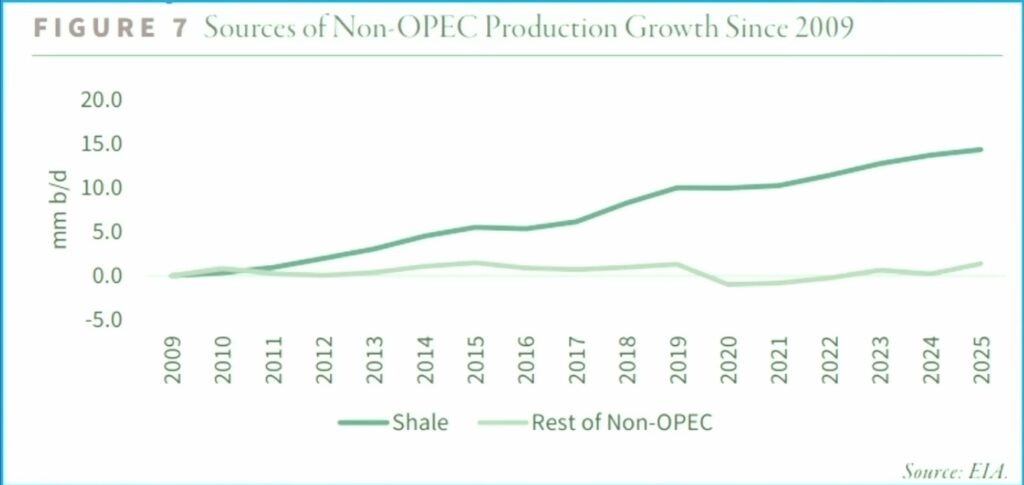
The US fancies itself an energy super-power, but it’s not. It’s a net importer of hydrocarbons – exporting short chain hydrocarbons from fracking while importing the longchain ones required for the production of diesel, kerosene and bunker fuel. Those long chain hydrocarbons are exactly the ones everyone else wants to import, so the US can do nothing to help even itself in this regard. At the moment it’s exporting from its own strategic reserves, which obviously cannot continue past a certain point, and that point is rapidly approaching. It can continue to export short chain hydrocarbons, but will be competing with everyone else for the rest.
The rig count for shale plays has been falling, and rig count is a leading indicator of production. The only shale oil play that had been growing in the US since 2019 was the Permian Basin, but now that too has topped out and gone into decline. This means the US will be sharing in the calamity that its war is causing for everyone else.
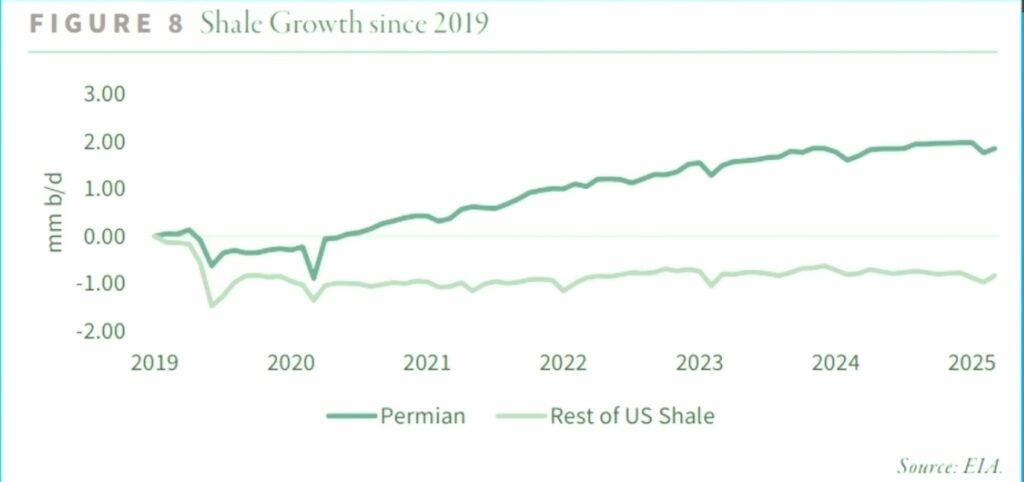
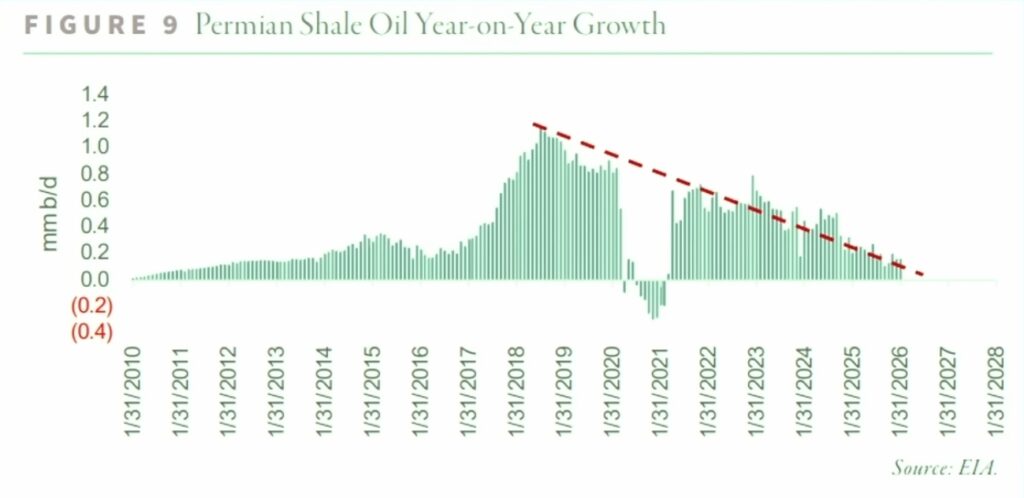
Chris points out that by June operational stress level will have been reached in the US, and by September the operational floor will have been reached, meaning refining will grind to a halt.
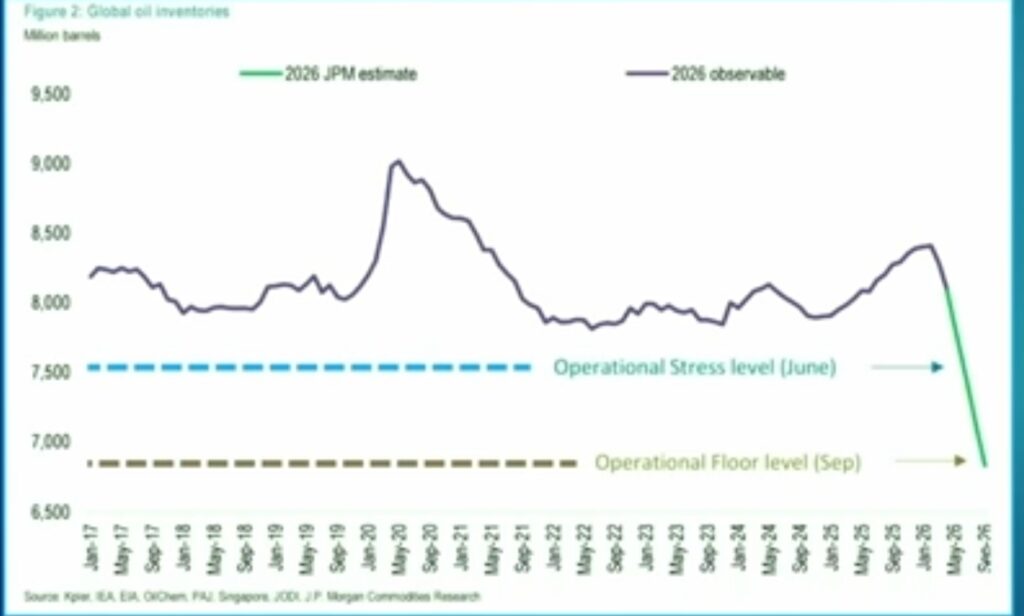
As for the rest of the world, the last ships carrying oil from the Gulf arrived at their destinations by April 20th. Now the world is burning inventories, if they have inventories to burn. If Hormuz opened tomorrow, the fuel crisis will still kill millions of people, both directly and indrectly through the effect on other supply chains. A global depression worse than the 1930s is already inevitable, and the longer this goes on, the worse the impact will be, but it will not be evenly distributed.
The impact on the food supply is going to be horrific in many places due to the catastrophic lack of fertiliser. Intensive farming has depleted the soil of many micronutrients, making food significantly less nutritious than it used to be. It has also depleted the macronutrients that artificial fertilisers replace. Approximately half the population of the world exists because the Haber-Bosch process allowed humanity to remove the fixed nitrogen bottleneck and produce vastly greater yields under the Green Revolution. The fertiliser is made from natural gas, and LNG exports are well down due to the closure of Hormuz. Fertiliser exports themselves are down by about a quarter. With less fertiliser, or no fertiliser, yields will fall substantially, if farmers can afford to plant at all with much higher input costs. They would also need to be sure to be able to harvest what they can plant, but with fuel prices being so uncertain, they may choose not to plant at all. The Green Revolution seems likely to be reversed over the next few years, with catastrophic results for the global population.
Famine has frequently been used in history as a control strategy (eg the Irish potato famine or the Ukrainian Holodmor), and it is about to be used again on a much larger scale. This time there is no encouragement to plant victory gardens as in WW2, and no information about the need to prepare or increase resilience. Private credit is being allowed to buy up precious farmland, while farmers are losing farms to foreclosure, and ever more regulatory barriers to growing one’s own food are being implemented. The stated goal is demand destruction, which is a euphemism for deliberately starving people. The real goal is to create total dependency on government so people can be forced to comply with the whims of billionaires. In other words, this is being allowed to happen in order to first control and then reduce the population, because the elites consider many to be useless eaters. Only the productive are of use. Resilience should therefore be on everyone’s minds, and resistance to the pervasive propaganda must increase dramatically in order to wake people up.
In a financial crisis, it’s never different this time, but this is not primarily a financial crisis. One is inevitable, since our current system has reached the end of a debt cycle, making a reset guaranteed. However, the other aspects of the polycrisis are going to obscure this, as food and fuel will be what’s on people’s minds. If a financial reset appears to help with these problems, it may even be welcomed, although it would be the entry portal to the digital gulag that our elites have been constructing through companies such as Palantir. From their point of view, people need to be forced into a system they would never choose if they understood the implications. The global elites are pushing this in order to seize central control of all resources prior to the contraction beginning in earnest. They intend to control the distribution, favouring themselves of course, and protect themselves from retribution for the profiligacy that created the casino capitalism which has handsomely rewarded them at the expense of everyone else.