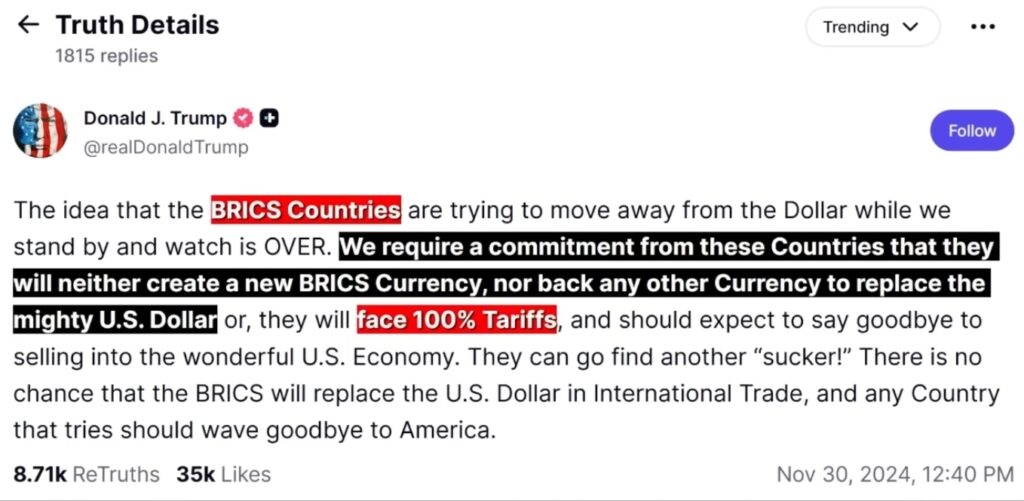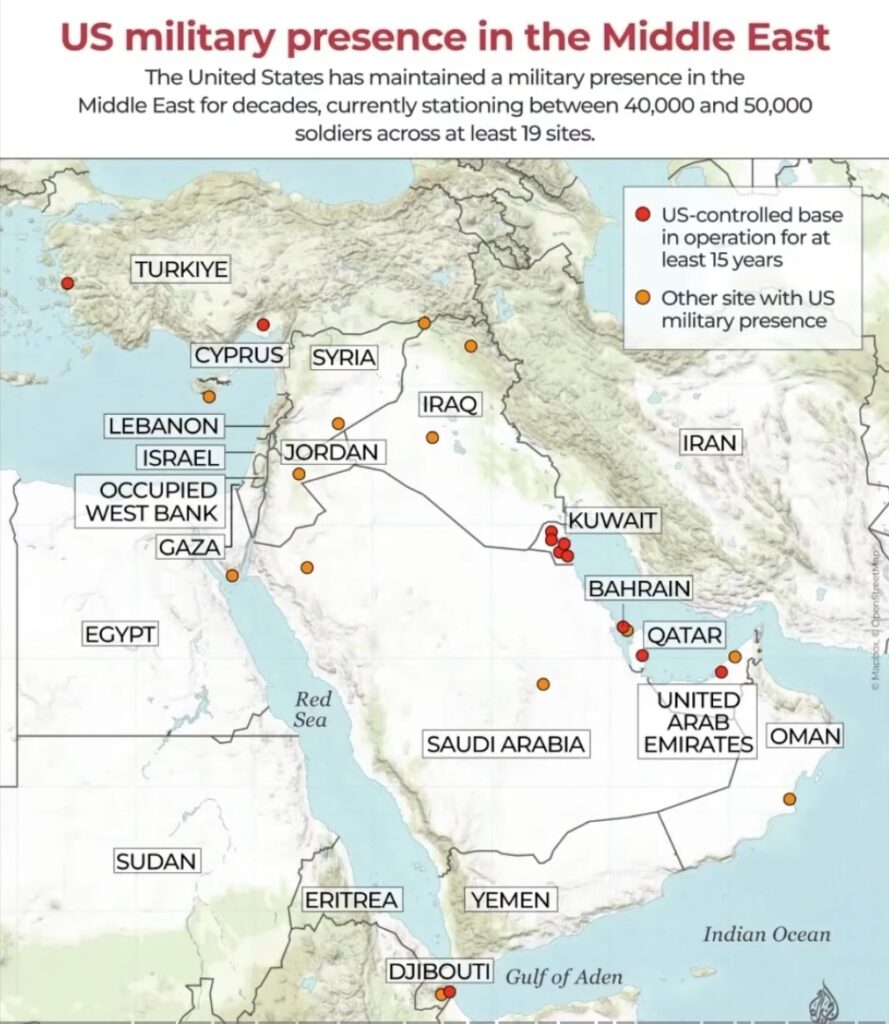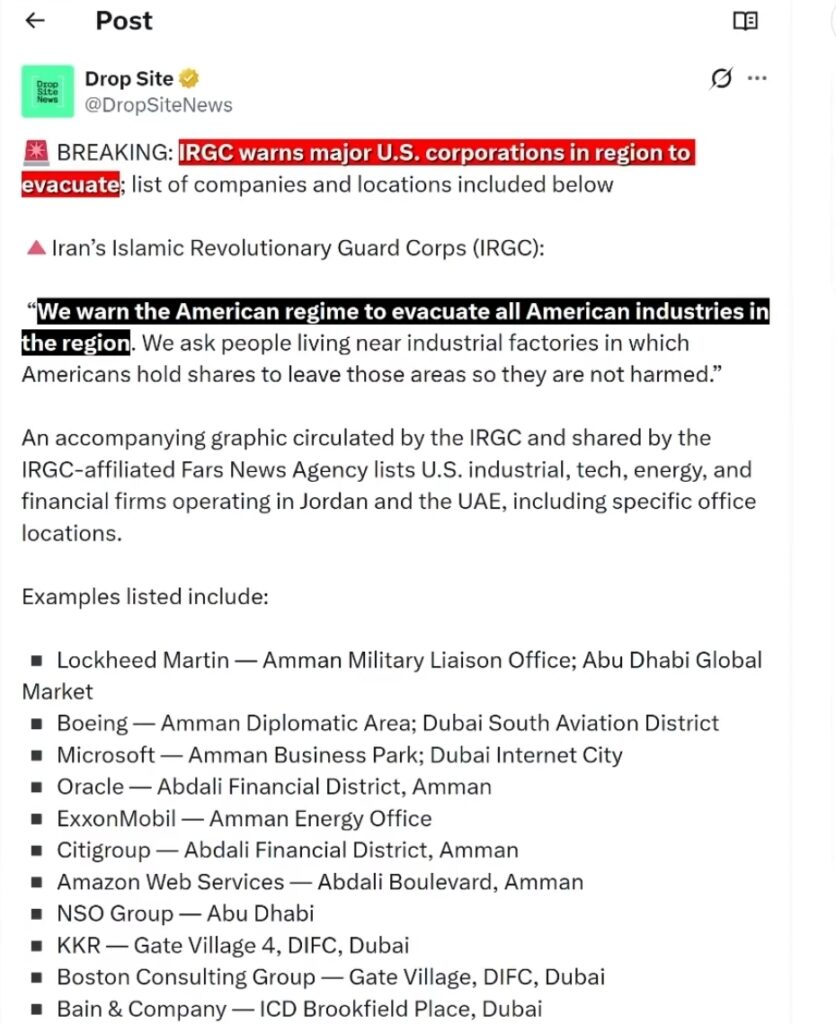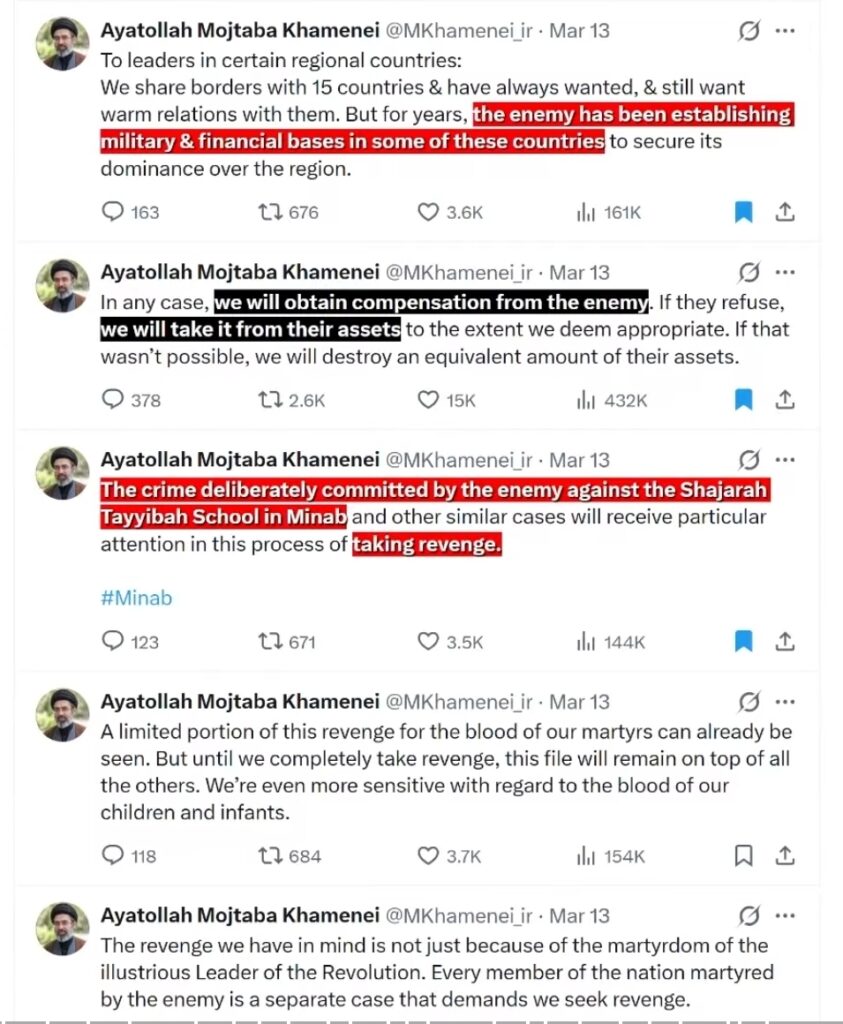
Alex Krainer is an excellent analyst, but for a long time he was giving the Trump regime far too much credit, assuming that no one could be that stupid, so there must be some kind of multi-dimensional chess going on. Not anymore, hence this analysis is very much worth your time.
There never was a sophisticated plan, at least not by the Trump contingent, which is composed of incompetent grifters completely under the thumb of the Epstein class. The last administration was also incompetent and controlled, and was also led by an old man in severe mental decline, but it was not recklessly insane to the extent that this one is. Biden was old and tired, and his administration was being run by underlings. Trump is clearly completely divorced from reality. He’s functionally illiterate due to dyslexia, and he also refuses to listen to anyone who doesn’t have him over a barrel with kompromat or who hasn’t bribed him sufficiently. Being utterly ignorant of most things, while attempting to project cognitive omnipotence, is ridiculous, and becoming increasingly so as the disasters his policies are leading to, both domestically and internationally, are increasingly obvious. Wake up MAGA people, you have been betrayed. You were never his real base. His real base is the Epstein class.
Trump appears to be suffering from fronto-temporal dementia, which runs in his family. His physical health is also clearly failing. He is not in control, although he clearly has delusions of grandeur typical of the narcissist he is, and that characteristic is increasingly obvious due to the disinhibition caused by dementia. He’s being ‘kept in the dark and fed shit’ by powerful people with deep pockets and a specific agenda. They know exactly what buttons to press in order to manipulate him into doing what they want, and unlike him, they do have a plan. The implementation of that plan began with the horribly misnamed Big Beautiful Bill and continued with the Genius Act and the Clarity Act. Together these are a recipe for total digital control by the Epstein class, along with absolute ownership of all resources and all assets, and an abenda of deliberate depopulation. They no longer need Trump since their agenda is now law. Either he will shortly die of congestive heart failure, or he’ll be removed thanks to the dripfeed of extremely incriminating Epstein revelations, or he could be removed in a military coup, or he could be violently removed. One of these things is going to happen, because in his dotage he’s now an unnecessary liability.
The second half of the video discussion above is particularly on point. Now that Krainer is looking for the agenda behind Trump, rather than assuming he has one of his own (other than somehow being emperor of the world), his analysis is very valuable. The key is zionism, which is an ideology, not a religion, and a particularly plutocratic one at that. Judaism is being co-opted for the purpose, although zionism and Judaism are not at all the same, and many Jews vehemently oppose what’s being done in their name. When the IDF is beating orthodox Jews in the streets for protesting the war in Gaza, it’s obvious that a major divide exists. It’s important to realise that the majority of zionists are not Jewish. There are less than 16 million Jews, but there are more than twice as many Christian zionists, and many atheist zionists as well. Both the religious Jewish zionists and the Christian zionists share an endtimes theology, up to a point, after which their views diverge. Both are trying to set the conditions for the advent of a messiah, the Jewish zionists for the first time, while the Christian zionists seek the return of Jesus. What the Jewish zionists don’t understand is that the Christian zionists want the Middle East to burn in armageddon for the Rapture, and that Jews would have to covert or die at that time. Sith friends like that, who needs enemies?
Unfortunately, most of the non-zionist Jewish opppsition lives outside of Israel, while the Israeli Jews have been inculcated into a mass formation. They are told to believe they’re the eternal victims, but also inherently superior to everyone else. They’re taught that they’re the chosen people, that laws apply only to inferior others, and that holding everyone to the same standards is unfair to them as superior beings. They reject equality outright, which is why no treaty with their neighbours will ever be possible until the mass formation dissolves, which they all do over time. This toxic worldview is taught in schools, universities and in the army, which all young people are required to join. A whole nation’s young people have been comprehensively brainwashed into (mostly) societal cohesion, and have been weaponised against their neighbours. In the process a majority has lost their humanity. They seek to be the new Sparta, with rigid martial discipline and an assumed right to rule the world. This is aided to a very significant extent by the elements if the diaspora which have come to control critical levers of global power, notably banking. They are the core of the Epstein class. Epstein himself said he was an agent of the Rothschilds, who are almost certainly the richest family in the world, and they are zionists. They seek to subjugate the global population through a digital panopticon and associated control grid. They’re leading the globalist faction that is attempting to impose Agenda 2030.
To do this, they needed to co-opt military power, and they have done that through the US, where most if the Christian zionists are based. The US ambassador tomIsraelmis N ardent Christian zionist. They’ve bought Congress almost entirely, and now they’ve almost managed a takeover of the legacy media, through Larry Ellison’s Oracle. The grip is tightening. The Trump regime is entirely controlled by these people, primarily through Jared Kushner and Steve Witkoff, who interface with the zionist billionaires of the Epstein class. This is a Master-Blaster situation, where a small coniving entity is directing the actions of a blundering fool.

This situation will not resolve quickly. Mass formations always sow the seeds of their own destruction, but first they commit atrocities. They already have, but they’re by no means finished. The range of potential atrocities is extremely large, given modern weaponry and an utterly ruthless take on using that capacity. The world is in for many years of conflict and many millions or even billions of deaths. The current just-in-time system rests on abudant energy and complex but fragile supply chains. Both if these are going away through deliberate destruction that has only just begun in earnest. When this is over, and it will end because its goals are delusional and unattainable, the world will never be the same. We will be comprehensively deindustrialised. A smaller population will once again be doing the physical labour that energy slaves have been performing for decades. The hydrocarbon age was always going to be a short interval of human history, and it was always going to end violently, since humans fight like cats in a sack when the pie is shrinking.
Our job is to maintain our common humanity, work together at a local level, help each other, and get our expectations in line with what reality can hope to deliver, which will be much less than we’re used to. We will lose a great deal of material prosperity and comfort, but we can rediscover human connection through mutual aid, and ultimately that’s what makes people happy.