
An epic financial battle is taking place behind the scenes over control of the global financial system. The end of a major debt cycle has been reached, making a reset inevitable. The battle is over what form that reset takes and who becomes the dominant player. There has been growing public awareness of the concept of central bank digital currencies (CBDCs), and consequent pushback as people begin to realise what living with programmable currency would be like. There would be no privacy. Every spending decision would be subject to approval based on factors such as carbon footprint or compliance with goverment dictats, and the digital money could be programmed to only work in certain areas. People could easily be financially geofenced. The surveillance and control would be all encompassing. People are less familiar with stablecoins, but these have all the disadvantages of CBDCs, but are even less transparent or accountable since they are private sector.
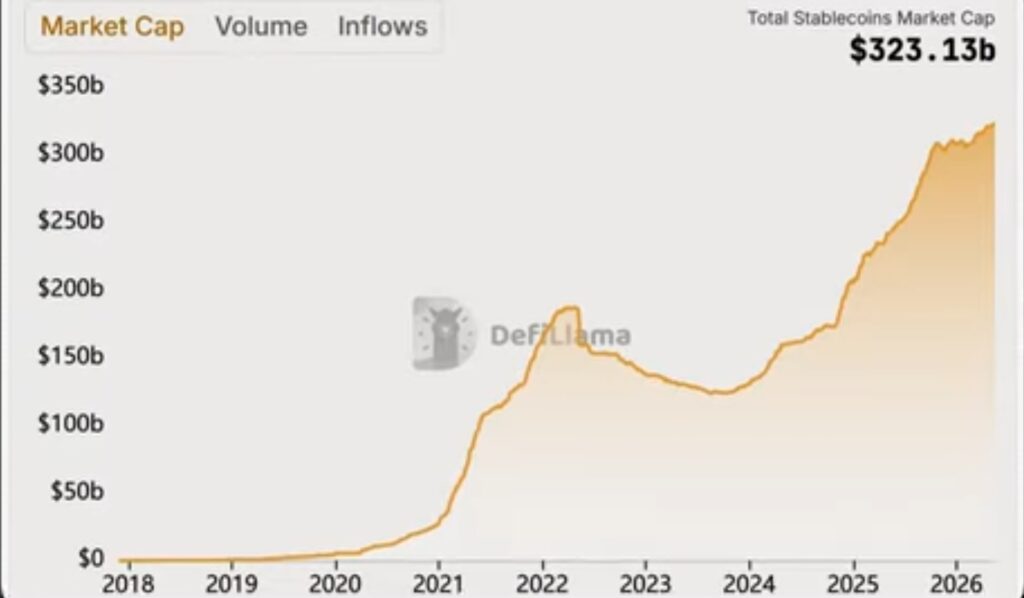
The US is taking the stablecoin route, and trying to make an end run around the faction pushing CBDCs by targeting retail usage directly. Trump has been bragging that they will cement American dominance of global finance. The plan is to maintain the reserve currency status of the US dollar while establishing a permanent market for US debt, given that stablecoins are backed by ownership of US treasuries. The US currently dominates the digital currency market to the tune of 98-99%, and other countries are waking up to the fact that they could be about to lose monetary sovereignty. American stablecoins are a trojan horse for digital dollarisation. If the US succeeds in capturing the global retail market for digital currency, other currencies would become irrelevant. Europe has passed MiCA legislation to regulate stablecoins, which Circle (USDC) has complied with and Tether (USDT) has not.
The UK is warning of risks associated with a potential run on a stablecoin. When Silicon Valley Bank failed, there was a brief decoupling of USDC (ie Circle) from the dollar, and there’s a concern that this may happen again. Under the Genius Act, a seven day redemption period is allowed during periods of market stress. In contrast in the UK settlement is on demand, by the end of a business day. Under conditions of stress where holders of American stablecoins would be unable to redeem quickly, they would have to route through an exchange, but if the exchange were also experiencing liqudity problems then there may be a decoupling. Holders may then panic and dump their holdings on to the secondary market. Capital would flood overwhelmingly into better regulated sectors. Weak American regulation of stablecoins creates systemic risk.

The UK seeks to be a crypto hub and remain a world leading financial centre, so it’s developing regulations meant to inspire confidence. They naturally want sterling to lie at the heart of it. If American stablecoins grow in dominance, transactions would bypass SWIFT, sterling, and UK clearing banks. Several other western countries are now developing their own stablecoins backed by their own currencies, but they may be too late to challenge American dominance. Bigger challenges come from China, with the digital yuan, and the cross-border CBDC mBridge system. Countries will be forced to take a side as digital systems compete for users, and geopolitical factions compete for dominance.