It was obvious from the start of the war in the Gulf that it was unwinnable, and would have catastrophic consequences globally. Some suggest that the ease of the illegal Venezuelan operation went to Trump’s head, so it was easier than it should have been for Israel to convince him that Iran would go the same way. Israel almost certainly has kompromat on Trump, who is the most blackmailable person on the face of the earth, which could have added additional pressure. It seems more plausible, however, to say that because the consequences were so obvious, and the course of action was chosen anyway, that those consequences were a feature, not a bug, of an underlying plan, albeit not one Trump would have been aware of. Analyst Brian Berletic has frequently citied a 2009 report, which outlines such a plan in detail, pointing out continuity of agenda since then. The primary stated goal was to halt the rise of China and reclaim global hegemony. Collateral damage to the rest of the world was not considered to be an obstacle.
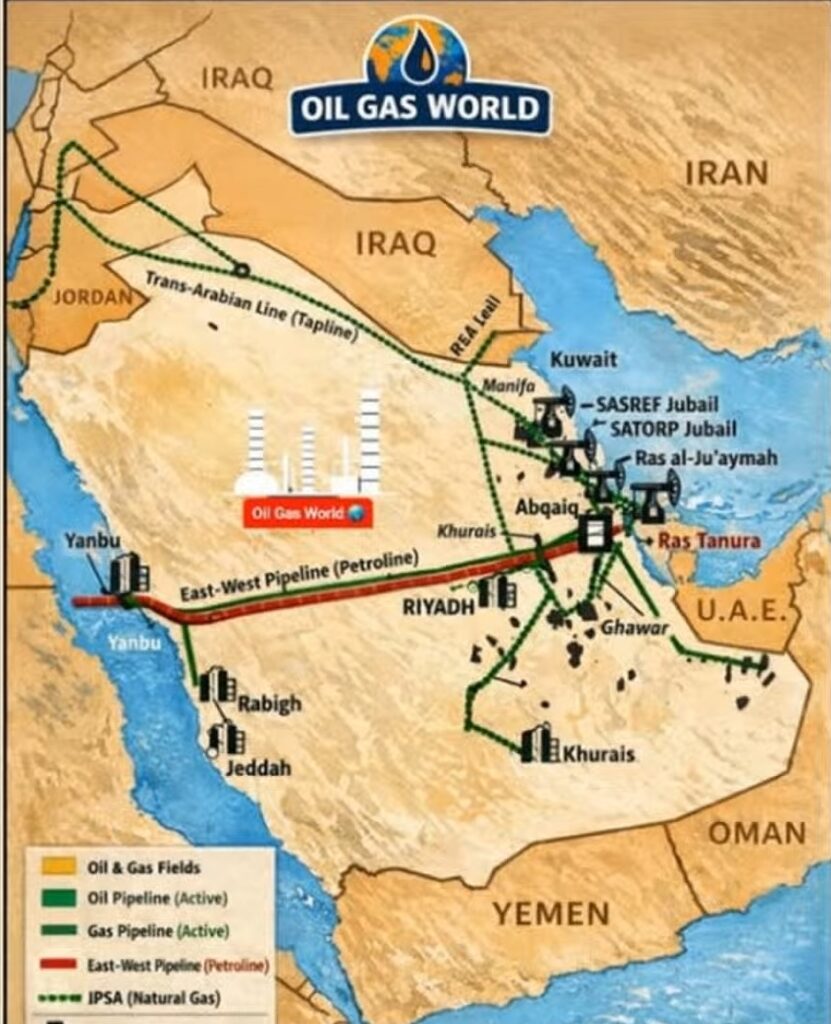
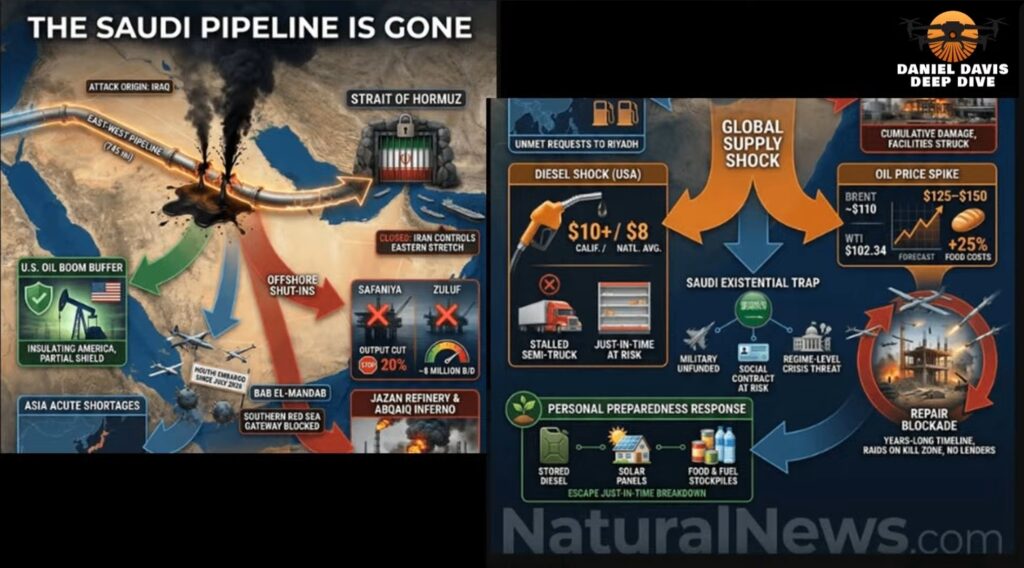
No doubt Trump himself would not have realised that politically toxic consequences, for which he will be personally blamed, would hit the US as well as most, if not all, of the rest of the world. Having taken personal credit for each disastrous decision, he will now be the fallguy for long-standing plans of the US deep state. The price of oil didn’t immediately skyrocket due to reliance on inventories, reduced Chinese demand, exports from the US strategic petroleum reserve, alternative routes for oil transit that blunted the impact, and market manipulation. That metastable situation is now coming to an end. Inventories are mostly depleted, including the US strategic reserve, Chinese demand is picking up again, other countries will be increasing overall demand by trying to rebuild reserves, alternative routes such as the Saudi pipeline to the Red Sea have been taken out, and market manipulation appears to be losing its effectiveness. Oil prices are stil below where one would expect, but the the consequences are manifesting instead in the market for refined products. The crack spread (ie the difference between the price of crude and the price of refined products such as diesel) is now over $100/barrel.
Diesel is the lifeblood of a modern economy, and producing it requires sufficient long-chain hydrocarbons. The wars in in the Gulf and in Ukraine have severely compromised exports of exactly this kind of crude, as well as deliberately damaging refineries, and a series of refinery ‘accidents’ around the world has also reduced the capacity for diesel production. These could have been the result of refineries being run flat out without maintenance or could have been the acts of sabotage. Diesel production competes with production of aviation fuel, which is demand due to military adventures, and also bunker fuel for transport by sea. Commercial airlines are cancelling flights and ticket prices are skyrocketing as a result. Shipping costs are rising sharply due to fuel prices and the rapidly increasing price of insurance. Diesel prices in the US have recectly hit record levels, and this is hitting the US economy right before midterm elections, when Trump and his party are historically unpopular. Many farmers are unable to harvest crops, because the cost of the necessary fuel exceeds the value of the crop. Truckers are planning to strike over fuel prices, which will heavily impact supply chains.
This is only the beginning of a dieselpocalypse that will be affecting the whole world. Russia banned diesel exports after its refineries were attacked, even though damage was not particularly severe due to the nature of the attacks. Ukraine uses relatively small drones that don’t pack much of a punch, although loading them with kerosene makes for a lot of smoke. Russia will be able to repair these installations, but still may choose not to export diesel. Refineries in the Gulf are a different story, as they were hit with ballistic missiles, and may have been completely destroyed. The US is imposing secondary sanctions on countries importing crude from those it’s at war with, so countries like India may stop importing and refining, further reducing diesel supply.
The US is also contemplating a diesel export ban, although this would be difficult. If the ban were global, it would include Canada, but Canada is where much of the raw material for producing diesel is sourced, and the US is currently engaged in a trade war with Canada anyway. A US diesel export ban might lower prices domestically, although supply chains could be disrupted, but it would send diesel prices around the world through the roof, which could lead to unrest, civil wars, or revolutions. Combined with the shortage and high price of fertiliser as a result of the war with Iran, skyhigh diesel prices could well mean planting seasons missed in many countries. This would lead to famine, and this would obviously amplify the potential for conflict within or between countries.
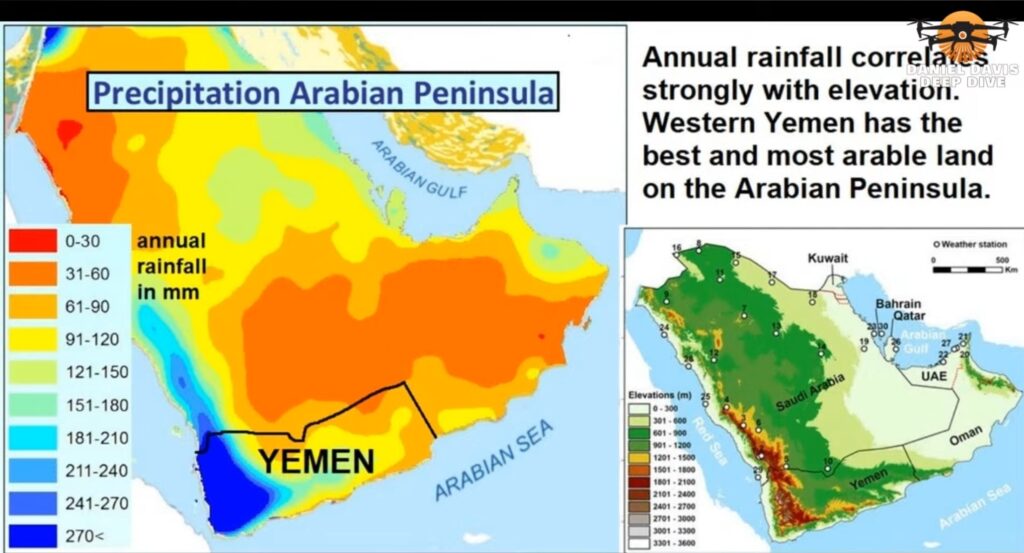
The Gulf monarchies are all at risk. They owe their existence to the British drawing arbitrary lines on a map under the Sykes-Picot arrangement a century ago, which has led to permanent destabilisation of the region. All are led by corrupt dynasties that are unpopular with their people. All are American vassal states that have been paying protection money through the petrodollar system, but that system is essentially over, and the promised protection never materialised when it mattered. None of them can defend themselves, especially against civilisational states like Iran and Yemen that have existed for thousands of years in their territorial fortresses.
Europe is also uniquely vulnerable. The US blew up the Nordstream pipeline in order to force Europe to buy much more expensive American LNG. In addition, Europe has voluntarily cut itself off from other sources of Russian gas, and its gas storage is insufficient for winter. It’s closed nuclear plants that were not at the end of their design life. Now Saudi Arabia has declared force majeur on its oil delivery contracts to Europe for at least the next two months, and very likely longer, since Saudi Arabia is currently unable to export oil at all due to the consequences of its war with Yemen. A US diesel export ban would hit it very hard as well. Trump has no hesitation in harming supposed allies.
There are decades in which nothing happens, and then there are years where decades happen. That is our current situation. There has never been an energy crisis anything like as severe as the one beginning to unfold. The consequences have barely begun to manifest, but the slow build-up is ending and the damage will now escalate rapidly.